
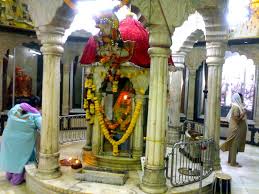
Jhulelal Mandir Ulhasnagar
Important for mapping Sindhi identity, continuity and community presence in Ulhasnagar.
Jhulelal Mandir Ulhasnagar
A major devotional centre connected with the worship of Jhulelal, regarded by many Sindhis as the community’s guardian deity.
Historical Overview
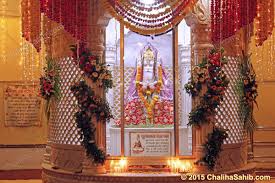
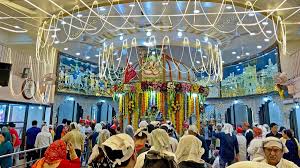
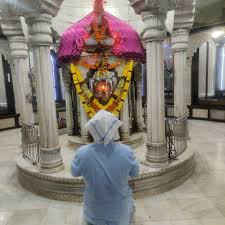
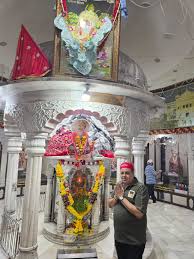
Jhulelal Mandir Ulhasnagar should be documented as part of Sindhi Global through local trust records, community oral histories and field verification. The site represents a layer of Sindhi memory, migration, faith, language or public life connected with Ulhasnagar. Jhulelal Temple, Ulhasnagar Introduction: A Temple Beyond Religion In the heart of Ulhasnagar, a bustling township born out of displacement and resilience, stands a sacred space that is far more than a place of worship — the Jhulelal Temple. For the Sindhi community, this temple is not just a structure of bricks and marble; it is a living memory, a spiritual anchor, and a symbol of survival. The story of Jhulelal Temple cannot be told without understanding the story of the Sindhi people themselves — a community that lost its geographical homeland during the Partition of India in 1947 but carried its identity across borders through faith, culture, and collective memory. This temple stands as one of the most important embodiments of that identity. Historical Context: From Sindh to Ulhasnagar Before 1947, Sindhis lived in Sindh (now in Pakistan), where the Indus River — Sindhu — was central to their cultural and spiritual life. Lord Jhulelal, believed to be an incarnation of Varuna, the water deity, was worshipped as the protector of the Sindhi people. With Partition, Sindhis faced a unique crisis — unlike many other communities, they did not receive a designated state in India. They were scattered across the country, forced to rebuild their lives from scratch. Ulhasnagar, originally a military transit camp near Mumbai, became one of the largest rehabilitation settlements for Sindhi refugees. In the absence of land, wealth, or infrastructure, the community turned to what it still possessed — its faith. It was in this environment that the Jhulelal Temple was established. The Birth of the Temple The early temple was modest — a small shrine built through community contributions. Families who had lost everything pooled resources, not to rebuild wealth, but to rebuild belief. This act itself holds immense significance. When survival is uncertain, faith becomes the first foundation. Over time, as the Sindhi community began to stabilize economically through trade and entrepreneurship, the temple evolved. What started as a simple shrine grew into a structured temple complex, reflecting both devotion and progress. Architectural Identity: Simple Yet Symbolic Unlike grand Mughal or Dravidian temples, Jhulelal Temple in Ulhasnagar reflects a different kind of architecture — one shaped by displacement. Its design is functional, accessible, and community-oriented rather than royal or monumental. Key elements include: The sanctum housing the idol of Jhulelal, often depicted seated on a fish (symbol of water and life) Prayer halls for collective gatherings Spaces for bhajans, kirtans, and festivals The simplicity of the architecture mirrors the ethos of the Sindhi community — practical, adaptive, and resilient. Spiritual Significance: Who is Jhulelal? To understand the temple, one must understand Jhulelal. Jhulelal is not just a deity; he is a symbol of unity, protection, and justice. According to Sindhi folklore, he emerged during a time when the community faced religious persecution. Through wisdom and divine intervention, he restored harmony. He is worshipped by both Hindus and Sindhi Sufis, making him a rare figure of interfaith reverence. This inclusive identity continues in the temple today, where devotion transcends rigid religious boundaries. Cheti Chand: The Soul of the Temple If there is one moment when the temple comes alive in its fullest expression, it is during Cheti Chand — the Sindhi New Year. On this day: Thousands gather in vibrant processions Traditional music fills the air Jhulelal’s idol is taken out in grand celebration Devotees offer prayers for prosperity and protection Cheti Chand is not just a festival — it is a cultural revival. It reminds the community of its roots, its struggles, and its journey. For younger generations, it becomes a bridge to identity. The Temple as a Cultural Institution Over the years, the Jhulelal Temple has evolved beyond a religious site into a cultural hub. It hosts: Community gatherings Marriage rituals Religious discourses Charity drives For a community without a geographical homeland in India, such spaces become critical in maintaining continuity. The temple acts as: A memory archive A social network A cultural school Economic and Social Influence Ulhasnagar is today known as a thriving commercial hub — from furniture to textiles to electronics. Much of this growth can be traced back to the Sindhi community’s entrepreneurial spirit. The temple, while spiritual, has indirectly played a role in this growth: It strengthened community bonds Created trust networks Encouraged collective resilience Faith, in this sense, translated into economic rebuilding. Generational Transition: Identity in the Modern Age One of the biggest challenges today is cultural dilution. Younger Sindhis, especially those growing up in urban environments, often feel disconnected from their roots. The temple serves as a point of reconnection. Through festivals, rituals, and storytelling, it keeps the heritage alive. However, the real opportunity — and this is where your platform comes in — is to digitize and amplify this connection. Why This Temple Matters Today In a world where heritage is often tied to land, Sindhi identity is unique — it survives without a geographical anchor. The Jhulelal Temple represents: A homeland recreated A culture preserved in memory A faith that traveled across borders It is a reminder that identity is not just about where you come from, but what you carry forward.
Cultural Significance
Important for mapping Sindhi identity, continuity and community presence in Ulhasnagar.
"This heritage place preserves the spirit of cultural memory, where architecture, landscape, and history come together in one experience."
— Cultural Heritage Board DocumentationVisual Journey
Geographic Context

Jhulelal Mandir Ulhasnagar
Jhulelal Mandir, Bhau Parsram Jhulelal Mandir Raod, Chowk, Ulhasnagar, Maharashtra 421002
Research & References
Continue Your Exploration
Discover more treasures of the Sindhi civilization.